
The Sim
_Atlantis.jpg) Origin of the Atlantis name:
Origin of the Atlantis name:Atlantis is a fictional city-state described by the ancient Greek philosopher Plato in his works Timaeus and Critias. Described as being located on a former continent in the middle of the Atlantic Ocean, Atlantis was used as an allegory for the hubris of nations. Described as being a vast naval empire that had conquered vast swathes of Europe, Atlantis was said to have lost divine favor after an ill-fated battle against Athens, and as punishment, was submerged into the Atlantic Ocean.
History of the Atlantis (1905-2410)
Over the centuries, several vessels have carried the name of the lost city-state of Atlantis, with most doing so in the name of peaceful exploration.
 The earliest built vessel to carry the name Atlantis was a three-masted Barquentine originally built as the lightship Burgermeister Bartels in Hamburg, Germany in 1905. Named after Hamburg mayor Johann Heinrich Bartels. After nearly 70 years of service as a lightship, having seen Earth’s first two World Wars come and go with the ship seeing limited military service in the Second of them, the Burgermeister Bartels was finally decommissioned in 1974 and laid up in Hamburg after a collision.
 Around 1983, the Burgermeister Bartels was sold to a German shipping company who converted the vessel into a three-masted barquentine to be used as a charter passenger ship until 1985. During this refit, she was renamed to Atlantis and began a worldwide sailing charter. In 1997, the Atlantis came under new owners which renovated the ship and placed her on Western Mediterranean cruises in the spring, Baltic cruises in the summer, and Caribbean cruises in the winter. In 2006, the Atlantis came under Dutch ownership and started with cruises to the Balearic Islands and Cote d’Azur.
At the outbreak of Earth’s Third World War, The Atlantis’ owners suspended all cruising operations and the Barquentine was laid up “until further notice.” The idle ship was subsequently requisitioned by NATO and used to assist in the evacuation of the cities of Naples and Genoa. It was during the latter of these operations that Iranian-made Shahed drones slammed into her. With her hull compromised, the heavily overloaded Atlantis capsized and sank just outside the port of Genoa, with many on board losing their lives.
 The first vessel to carry the name USS Atlantis was SP-40: A wooden-hulled motorboat built in 1911 at Greenport, Long Island, New York by the Greenport Basin and Construction Company. The vessel was acquired by the United States Navy from Leonard H. Dyer of New York City on July 2, 1917. Slated for service as a patrol boat, the vessel was designated with the hull number SP-40, and was commissioned on September 27. 1917.
Atlantis patrolled primarily in the waters of the 3rd Naval District into the spring of 1918, departing on May 31, 1918 for Troy, New York on the first leg of a relocation to the Detroit section of the 9th Naval District. After conducting summer and fall patrols in that district, she began a return journey on November 12, 1918, a day after Earth’s First World War had come to an end. She arrived in New York City on November 28. For the remainder of her naval career, Atlantis operated locally in the waters of the 3rd Naval District, primarily in New York City, until her decommissioning on May 7, 1919. Her name was struck from the Naval Vessel Register on July 7, and was sold to Shirley G. Ellis of Larchmont, New York on October 30.
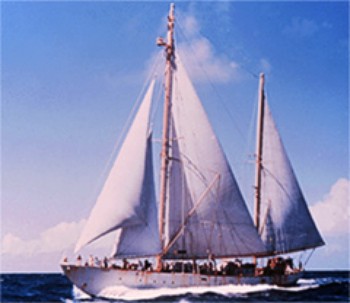 The most influential vessel to carry the name Atlantis was a ketch-rigged research vessel operated by the Woods Hole Oceanographic Institution from 1931 to 1966. The first research vessel of the Institution and the first ship built specifically for interdisciplinary research in Marine Biology, Marine Geology, and Physical Oceanography. The 460 ton Marconi-rigged ketch originally carried a crew of 17 with room for 5 scientists. Columbus Iselin II, Atlantis’ first master and a major influence in her design, felt that steadiness, silence, and cruising range were more important than speed. After her construction was complete, The Woods Hole Oceanographic Institution (WHOI) searched for an appropriate name for the new vessel. Alexander Forbes, a trustee of WHOI, had recently purchased a schooner named Atlantis from Iselin. Forbes rechristened his schooner to free up the Atlantis name for the new vessel.
Use of a continuously-recording fathometer on Atlantis cruise no. 150 enabled Ivan Tolstoy, Maurice Ewing, and other scientists to describe the first abyssal plain in 1947. This plain, located to the south of Newfoundland, is now known as the Sohm Abyssal Plain. Following this discovery, many other examples of abyssal plains were discovered in the rest of Earth’s oceans. In WHOI service, Atlantis made 299 cruises and covered 700,000 miles, carrying out all types of ocean science.
In 1964, Atlantis was offered to the government of Argentina and refurbished for the National Scientific and Technical Research Council (CONICET). She entered service in 1966 as the research vessel El Austral with CONICET, operated by the Argentine Navy ARA EL Austral (Q-47) and carrying out important investigations in the Argentine Sea. After the purpose-built ice-strengthened research ship ARA Puerto Deseado (Q-20) took over as the platform for CONICET’s projects in December 1978, El Austral was decommissioned from the Argentine Navy and laid up with a skeleton crew at Puerto Madryn.
In 1995, after 17 years in layup, CONICET reached an agreement to transfer El Austral to the Argentine Naval Prefecture (PNA), where she was renamed PNA Dr. Bernardo Houssay (MOV-1) after the eminent physiologist and director of CONICET. However, she remained laid up in Dock E, Buenos Aires, until 2005, when she was moved to the nearby Tandanor shipyard with a view of restoring her to active service as a training ship. However, the PNA reached the conclusion that the ship’s condition, after 27 years in layup, could no longer meet its developing requirements, including modern safety and navigation standards, and instead decided to build a new ship, albeit largely to the same design and incorporating some components from the original 1930 ship.
 Not every vessel to carry the name Atlantis was used for peaceful purposes. Built by Bremer Vulkan in 1937, she began her career as the cargo ship Goldenfels, owned and operated by DDG Hansa, Bremen. In 1939, the Goldenfels was requisitioned by the Kriegsmarine and converted into a warship by DeShiMAG, Bremen. In December 1939, two months after Earth’s Second World War had begun, she was commissioned as the commerce raider Atlantis.
Known officially to the Kriegsmarine as Schiff 16 and to the Royal Navy as Raider-C, during Earth’s Second World War, Atlantis traveled more than 100,000 miles in 602 days, and sank or captured 22 ships with a combined tonnage of 144,384 before her menace was finally ended on November 22, 1941 by the British cruiser HMS Devonshire.
_RV_Alantis_II.jpeg) Built in 1962, RV Atlantis II was a research vessel formerly operated by the Woods Hole Oceanographic Institution. She was used as a support vessel for the Alvin submersible for many years, including in 1986, when she was used by Dr. Robert Ballard as mother-ship to DSV Alvin when Ballard and team surveyed the wreck of the British passenger liner RMS Titanic for the first time, having recently discovered it the previous year. The expedition was sponsored by National Geographic. Atlantis II retired from Woods Hole service in 1996. After a period of inactivity in New Orleans, she was transferred to the travel company Outlander Expeditions in 2006.
Built in 1962, RV Atlantis II was a research vessel formerly operated by the Woods Hole Oceanographic Institution. She was used as a support vessel for the Alvin submersible for many years, including in 1986, when she was used by Dr. Robert Ballard as mother-ship to DSV Alvin when Ballard and team surveyed the wreck of the British passenger liner RMS Titanic for the first time, having recently discovered it the previous year. The expedition was sponsored by National Geographic. Atlantis II retired from Woods Hole service in 1996. After a period of inactivity in New Orleans, she was transferred to the travel company Outlander Expeditions in 2006. The Atlantis II Seamounts in the North Atlantic Ocean, and the Atlantis II Fracture Zone in the Indian Ocean have been named in honor of Atlantis II.
 The Third Atlantis to see Woods Hole service was AGOR-25, a Thomas G. Thompson-class oceanographic research ship owned by the United States Navy and operated by the Woods Hole Oceanographic Institution as part of the University-National Oceanographic Laboratory System (UNOLS) fleet. She was the second Atlantis to host DSV Alvin, and the third vessel to trace direct lineage to the Institution’s first research vessel, the sailboat Atlantis, for which one of NASA’s Space Shuttles was also named.
Built by Halter Marine Inc., Gulfport Mississippi, she was laid down in August of 1994 and launched in February 1996. She was delivered to the United States Navy on February 25, 1998, as the RV Atlantis (AGOR-25). In July 2021, Atlantis completed a year-long midlife maintenance and refit at Dakota Creek Shipyard.
In 2022, Atlantis was involved in the rescue of 13 people off the coast of North Carolina. The fishing vessel Tremont had sent a mayday at 0200 on October 28, following a collision with the container ship MSC Rita. Atlantis, as well as the Motor Vessel Drystan and assistance from the United States Coast Guard, rescued the crew later that morning.
Due to the relative recency of her refit, Atlantis survived Earth’s Third World War relatively unscathed, and was one of the few beacons of hope during the Post-Atomic Horror.
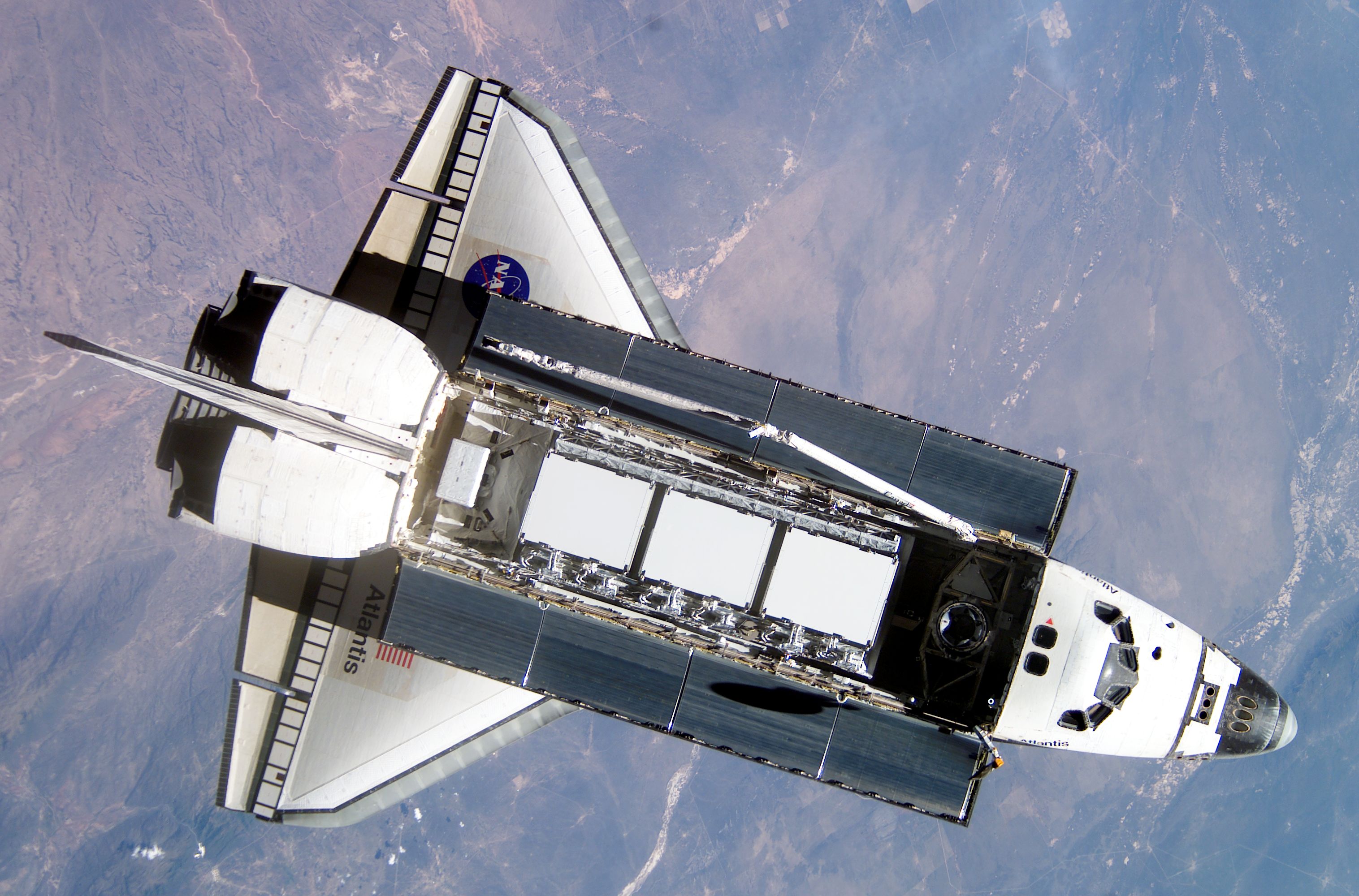 The first spacecraft to carry the name Atlantis was OV-104. The fourth of the National Aeronautics and Space Administration’s (NASA) space shuttle fleet, and the penultimate shuttle built. Manufactured by the Rockwell International company in Southern California, Atlantis was delivered to the John F. Kennedy Space Center in Eastern Florida in April 1985. Its maiden flight was the mission STS-51-J, made from October 3-7, 1985. Atlantis is named after RV Atlantis, the two-masted sailing ship operated by the Woods Hole Oceanographic Institution from 1930 to 1966.
During the launch of its third mission STS-27 on December 2, 1988, ablative insulation from the starboard solid rocket booster nose cap broke off and struck the orbiter, compromising its heat shielding. Upon inspection, the crew believed that they were going to die upon re-entry. Compounded by the classified nature of the mission requiring the crew to use a slow, encrypted transmission method, likely causing the images of the damage that NASA saw to be of poor quality, and leading Mission Control to downplay it as “just lights and shadows”. Atlantis survived re-entry due to the damage being over a reinforced area of the heat shielding. However, a similar strike would prove fatal to the crew of STS-107 15 years later.
In 1995 on mission STS-71, the 100th American crewed spaceflight, Atlantis became the first Space Shuttle to dock with the Russian space station Mir, for a time becoming the largest spacecraft in orbit of Earth when docked to the station. The Shuttle-Mir program was one of the first steps of American-Russian cooperation in outer space.
 After 26 years of service and 32 missions completed, Atlantis embarked on its 33rd and final mission (as well as the final mission of the Space Shuttle Program as a whole) STS-135, on July 8, 2011. STS-134 by the shuttle Endeavour was expected to be the final flight before STS-135 was authorized in October 2010. STS-135 took advantage of the processing for the STS-335 Launch on Need mission if STS-134’s crew became stranded in orbit. Atlantis landed for the final time at the Kennedy Space Center on July 21, 2011, bringing the Space Shuttle Program to a close.
By the end of its final mission, Atlantis had orbited Earth a total of 4,848 times, traveling nearly 126,000,000 miles, more than 525 times the distance from Earth to Luna. Following the orbiter’s retirement, Atlantis was relocated to the Kennedy Space Center Visitor Complex, where she has been on permanent display since 2013.
_NX-05_Atlantis.png) The first Starfleet vessel to carry the name Atlantis was NX-05, an NX-Class starship of the United Earth Starfleet. Under construction at the outbreak of the Earth-Romulan War in 2155, Atlantis entered service in late February 2156 under the command of Captain Weiss. Her first mission (along with Starfleet’s other NX-Class ships) was to test the warp detection grids provided by the Vulcans for Coalition worlds.
The first Starfleet vessel to carry the name Atlantis was NX-05, an NX-Class starship of the United Earth Starfleet. Under construction at the outbreak of the Earth-Romulan War in 2155, Atlantis entered service in late February 2156 under the command of Captain Weiss. Her first mission (along with Starfleet’s other NX-Class ships) was to test the warp detection grids provided by the Vulcans for Coalition worlds. On April 20, 2156, Atlantis accompanied the newly refitted Columbia-class SS Enterprise (NX-01) on a days-long standoff with four Romulan birds of prey. The Romulans fired first and hit Atlantis, and the skirmish that ensued saw the Earth forces damage one bird of prey and disperse the others.
Atlantis’ career was cut short on June 20, 2156 over Tau Ceti IV when she was destroyed by the Romulans, though her crew successfully abandoned ship before her destruction. The survivors were rescued by Coalition forces before they were forced to withdraw from the system.
_NCC-1786_USS_Atlantis.jpg) The first Federation starship to carry the name USS Atlantis was NCC-1786, a Constitution-class cruiser launched in 2245. She patrolled the Romulan Neutral Zone in her early career, recording multiple instances of Romulan activity along the border. When the Constitution class cruisers were being refitted for five year missions starting with the USS Enterprise NCC-1701, the Atlantis followed her sister ship and was refitted to identical specifications alongside the USS Yamato, USS Yorktown, and USS Constitution.
The first Federation starship to carry the name USS Atlantis was NCC-1786, a Constitution-class cruiser launched in 2245. She patrolled the Romulan Neutral Zone in her early career, recording multiple instances of Romulan activity along the border. When the Constitution class cruisers were being refitted for five year missions starting with the USS Enterprise NCC-1701, the Atlantis followed her sister ship and was refitted to identical specifications alongside the USS Yamato, USS Yorktown, and USS Constitution.The Atlantis then proceeded on a five year exploration mission, where she was commanded by Captain Ritsu Suzumiya - one of Starfleet’s finest Rhydonian commanders. During her five year mission, the Atlantis made contact with twenty six new civilizations, charted three hundred thirty star systems, and made numerous scientific discoveries along the way.
When the Atlantis returned to Earth in 2271, she wasn’t selected to receive the Constitution Mk. II refit. Instead she was to become a “test bed” for the refit’s weapons systems. In other words, the Atlantis would be used for target practice, disposing of her. Infuriated, Captain Suzumiya resigned her commission in protest, and returned to Rhydonia in disgrace.
%20USS%20Missouri%20(NCC-1526).jpg) The second Federation starship to carry the name USS Atlantis was NCC-1865, a Miranda class starship commissioned as a science cruiser in 2287 under the command of Captain Bonavan Hatari. The Atlantis primarily patrolled Sector 813, serving the needs of the Federation constituents the Eifie Republic and the Federal Rheuysian Republic. In 2293, the Atlantis was briefly considered for Operation Retrieve, but the Operation to rescue Captain James T. Kirk and Doctor Leonard McCoy was both vetoed by the Federation President and made unnecessary by the USS Enterprise-A’s clandestine mission to extract the two officers.
The second Federation starship to carry the name USS Atlantis was NCC-1865, a Miranda class starship commissioned as a science cruiser in 2287 under the command of Captain Bonavan Hatari. The Atlantis primarily patrolled Sector 813, serving the needs of the Federation constituents the Eifie Republic and the Federal Rheuysian Republic. In 2293, the Atlantis was briefly considered for Operation Retrieve, but the Operation to rescue Captain James T. Kirk and Doctor Leonard McCoy was both vetoed by the Federation President and made unnecessary by the USS Enterprise-A’s clandestine mission to extract the two officers.The Atlantis was quietly decommissioned in 2317, bringing to an end a rather unremarkable career. Following the decommissioning of NCC-1865, it would be almost fifty years before another starship would be named Atlantis.
_NCC-72007_USS_Atlantis.jpg) In 2364, the name Atlantis would be rather hastily assigned to an Ambassador class starship formerly known as the USS Plato. The rushed reactivation job was to fill an immediate need for Starfleet following repeated delays in the Galaxy-class USS Plato’s construction. Captain Jana Park would command the newly-rechristened Atlantis on her shakedown cruise. At the time, most people assumed that the ex-Plato’s reactivation as the Atlantis would be temporary, including Captain Park, who reportedly told Admiral Gregory Quinn that the Atlantis was “practically a floating scrapheap.” However, with the issues encountered on the shakedown cruise ironed out by 2365, Command of the Atlantis was turned over to Captain Dick Brownfield, and her first assignment off her reactivation was a diplomatic mission to the Alderaan system.
In 2364, the name Atlantis would be rather hastily assigned to an Ambassador class starship formerly known as the USS Plato. The rushed reactivation job was to fill an immediate need for Starfleet following repeated delays in the Galaxy-class USS Plato’s construction. Captain Jana Park would command the newly-rechristened Atlantis on her shakedown cruise. At the time, most people assumed that the ex-Plato’s reactivation as the Atlantis would be temporary, including Captain Park, who reportedly told Admiral Gregory Quinn that the Atlantis was “practically a floating scrapheap.” However, with the issues encountered on the shakedown cruise ironed out by 2365, Command of the Atlantis was turned over to Captain Dick Brownfield, and her first assignment off her reactivation was a diplomatic mission to the Alderaan system. In 2372, the Atlantis received a distress call from Starbase 113 after a massive explosion at the Starbase, and proceeded there at maximum warp. En route, the Atlantis also relayed preliminary evidence to other Starfleet ships that Starbase 113 believed that Lieutenant Commander Worf was responsible.
Despite early opinions that the reactivation would be temporary, the Atlantis survived the Dominion War. However, in 2378, the Atlantis would be afflicted by a Kerplickian lice infestation that would claim the lives of over 100 crewmembers. When the Atlantis reached Starbase 472, she was ordered to hold short. The surviving crew were tendered off the ship and placed under a strict quarantine. Once the quarantine was in place, the Atlantis was towed out into deep space and scuttled. Embarrassed by the incident, Starfleet swept it under the rug and required the surviving crew to sign NDAs as a condition of their reassignments.
_NCC-85103_USS_Atlantis.jpg) The current USS Atlantis is NCC-85103 - A Sovereign-Class starship commissioned in 2381. The fourth Federation starship to bear the name, the date of her launch was intentional. A year prior, in 2380, the Kennedy Space Center Visitor Complex on Merritt Island, Florida, The Smithsonian National Air and Space Museum’s Steven F. Udvar-Hazy Center in Chantily Virginia, the California Science Center in Los Angeles, California, and the Intrepid Museum in New York City, the permanent homes of Earth’s surviving Space Shuttles, were gearing up to jointly celebrate the 400th anniversary of STS-1, the first flight of the Space Shuttle Program. With the USS Enterprise NCC-1701-E having been in commission for eight years by this point, and knowing that the names of the rest of Earth’s Space Shuttles were attached to some of the most storied vessels in Starfleet history, the museums jointly began lobbying Starfleet to have a batch of Sovereign-class starships named in honor of Earth’s Space Shuttles to celebrate 400 years since the Space Shuttle Program.
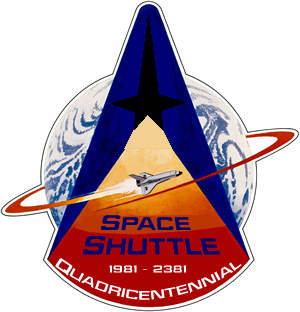
The current USS Atlantis is NCC-85103 - A Sovereign-Class starship commissioned in 2381. The fourth Federation starship to bear the name, the date of her launch was intentional. A year prior, in 2380, the Kennedy Space Center Visitor Complex on Merritt Island, Florida, The Smithsonian National Air and Space Museum’s Steven F. Udvar-Hazy Center in Chantily Virginia, the California Science Center in Los Angeles, California, and the Intrepid Museum in New York City, the permanent homes of Earth’s surviving Space Shuttles, were gearing up to jointly celebrate the 400th anniversary of STS-1, the first flight of the Space Shuttle Program. With the USS Enterprise NCC-1701-E having been in commission for eight years by this point, and knowing that the names of the rest of Earth’s Space Shuttles were attached to some of the most storied vessels in Starfleet history, the museums jointly began lobbying Starfleet to have a batch of Sovereign-class starships named in honor of Earth’s Space Shuttles to celebrate 400 years since the Space Shuttle Program. Surprisingly, the lobby was well-received by Starfleet, who saw the merits in commemorating the Quadricentennial of Earth’s Space Shuttle Program. And so, Starfleet ordered the construction of five new Sovereign-class starships: The USS Columbia, USS Challenger, USS Discovery, USS Atlantis, and USS Endeavour.
The Atlantis was commanded new out of spacedock by a recently-promoted Commander Perrine Clostermann. Though there was doubt that handing such a highly-advanced vessel over to such a fresh captain was a good idea, Commander Clostermann quickly earned her stripes, putting the Atlantis through her paces on a successful shakedown cruise before her delivery to the 88th Fleet, and was assigned to patrol the Romulan Neutral Zone as strategic deterrence.
In 2385, four years into the Atlanis’ assignment, Reman terrorists calling themselves the “Sons of Shinzon” stormed the Federation embassy on Romulus and took hostages. The order was given to all Starfleet vessels assigned along the Neutral Zone to stand down and allow diplomacy to resolve the hostage crisis. However, Commander Clostermann correctly predicted that the so-called “Sons of Shinzon” didn’t negotiate, and disobeyed a direct order to carry out an unauthorized Starfleet operation on Romulan soil. Thanks to the Atlantis’ efforts, Commander Clostermann saved the lives of two dozen Federation diplomats, including a close relative to the Federation Ambassador to Romulus. Because of this, instead of being court martialed for disobeying orders, as she rightfully should have, Clostermann was exonerated of wrongdoing and promoted to the rank of Captain.
Following the Sons of Shinzon incident, the Atlantis was temporarily reassigned to the 16th Fleet to assist the USS The Sullivans A in overseeing a historic summit between the Bajorans and the Hebitians - a biological offshoot of the Cardassians that became Federation members. Tensions were high, and the 16th Fleet had requested the presence of a Sovereign at the talks. Hence Junior Fleet’s temporary loan of the Atlantis and her crew. Fortunately, the talks went off without a hitch, and the Bajorans demonstrated a willingness to set aside preconceived prejudices of the Hebitians due to their common biology with the Cardassians. And the talks ended with the seeds of a fruitful relationship being planted.
Following the conclusion of the Bajoran-Hebitian summit, the Atlantis’ temporary assignment with the 16th Fleet ended, and she was transferred back to the 88th Fleet. Upon her return to Earth in late 2386, the Atlantis onboarded an FNN film crew to film a behind-the-scenes documentary on the day-to-day operations aboard a Sovereign-class ship. During filming, Captain Clostermann received word of the loss of the USS Destination with all hands, including Commander Amelie Planchard; a young officer whom she had personally vouched for.
 When the Atlantis arrived back to Earth at the conclusion of filming, tragic news once again reached Captain Clostermann; this time much closer to home: Captain Clostermann’s father, Gaston Clostermann, had abruptly passed away from cardiac arrest, and as the named executor of Chateau Clostermann - her family’s estate, she was needed back in France to keep the estate out of her stepmother's hands. With the combined one-two punch of losing both Commander Planchard and her father, Captain Clostermann resigned from Starfleet and returned to France. Following Captain Clostermann’s departure, the Atlantis was given to another captain.
By the year 2410, the Atlantis had been badly damaged during a recent mission. Originally limping to the Algonquin Fleet Yards, she was towed to Utopia Planitia Fleet Yards in the Sol System which was better equipped to service Sovereign-class ships. After a top-to-bottom evaluation of the ship’s condition, the Atlantis was originally scheduled to be broken apart. However, a hold was placed on her scrapping orders by a returning Captain Perrine Clostermann, the Atlantis’ original commander who would oversee the ship’s refit and return to service, where she would retake command of the Atlantis.